Co-Extruded Flexible LED Linear Profiles (Neon Flex)
Co-extruded flexible LED linear lighting: 53 catalogued profiles, 6x6 to 20x20 mm sections, 120 degree beam, top / side / COB emitting options, DC24V.
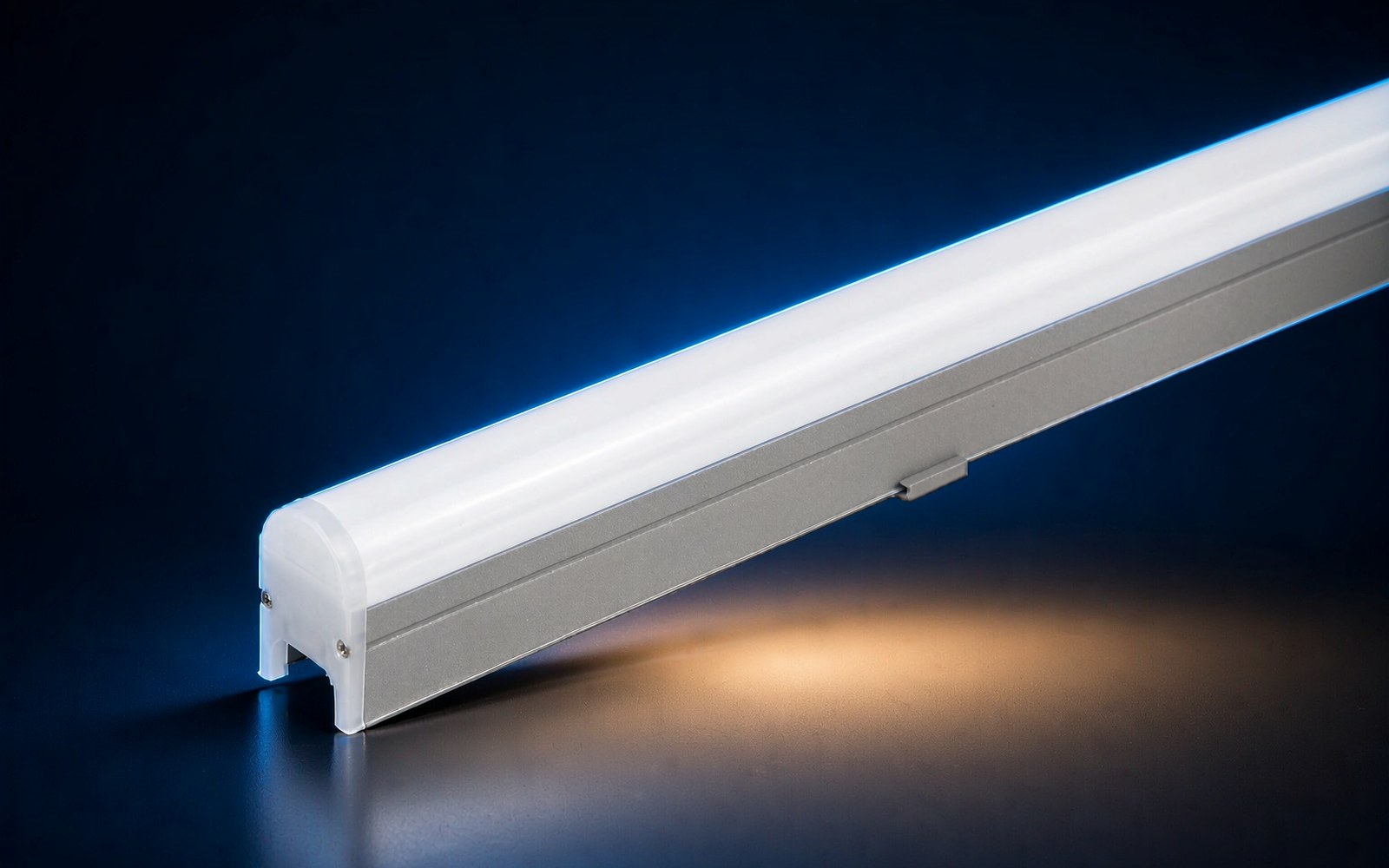
A co-extruded flexible linear profile, commonly called LED neon flex, is a continuous silicone-encapsulated LED strip that emits a dot-free line and can follow curved outlines. Guangdi Xingcan documents 53 such entries: 48 neon flex profiles, 2 wall-washer strips and 3 slim rigid bars, with sections from 6x6 mm to 20x20 mm, a 120 degree emitting angle and top-view, side-view and COB variants.
Scope: what this family covers
This page covers continuous silicone co-extruded flexible profiles for curved building outlines, signage shapes, cove and commercial interior linear accents. It does not cover rigid IP65 extruded facade luminaires (see Architectural Linear Lights), addressable pixel nodes, or bare LED strip without encapsulation. Maximum run length and bending radius are confirmed per model from the original catalogue.
Specifications
| Catalogue entries | 53: 48 neon flex profiles, 2 wall-washer strips, 3 slim rigid bars |
|---|---|
| Section sizes | 6x6, 10x10, 12x12, 15x15, 16x16, 20x20 mm and side-view sections from 4x8 to 10x23 mm |
| PCB width | 4, 8, 10 or 12 mm depending on section |
| Emitting angle | 120 degrees on documented representative sections |
| Emitting direction | Top view, side view, L-shape side emission, COB, anti-break, high-voltage |
| Reference weight | 43.5 g/m (6x6 top view), 57 g/m (10x4.5 high voltage), 109 g/m (6x16 side view anti-break) |
| Accessories | End caps, tail plugs, 3M adhesive, mounting clips, aluminium and bendable profiles |
| Parameter status | Representative page values; not extrapolated to every section |
Housing and diffuser materials
- Silicone co-extruded encapsulation
- Flexible PCB with 4-12 mm width
- 3M adhesive backing on selected models
- Aluminium carrier and bendable profiles
- PC end caps and tail plugs
- Mounting clips and plastic fasteners
From drawing to shipment
- Section and emitting direction selection The first decision is section size and emitting direction: top view for direct line of sight, side view for recessed or edge-lit reveals, and L-shape side emission for corners. Sections range from 6x6 mm to 20x20 mm, with side-view options from 4x8 to 10x23 mm.
- Space, bending and run review We check the available channel width, minimum bending direction and radius, and the total run length against the client drawing. The catalogue records representative pages only; minimum bending radius and maximum run length are confirmed against the original document for the chosen section.
- Colour, voltage and accessory schedule Colour temperature, RGB/RGBW option, supply voltage and control method are fixed per run. End caps, tail plugs, 3M adhesive, clips and aluminium carriers are listed as separate BOM lines because they differ between top-view, side-view and high-voltage sections.
- Batch grouping and check Sections used on one continuous visible line are grouped by production batch to reduce colour temperature variation. Each length is powered and checked for uniform output and connector integrity before packing.
- Installation communication We communicate the bending direction, fixing clip spacing and waterproof end-cap treatment. Field cutting, potting of connections and final installation remain with the client contractor; a cut end that is not resealed is not IP-rated.
Flexible Linear Lighting: profiles, lenses and connectors
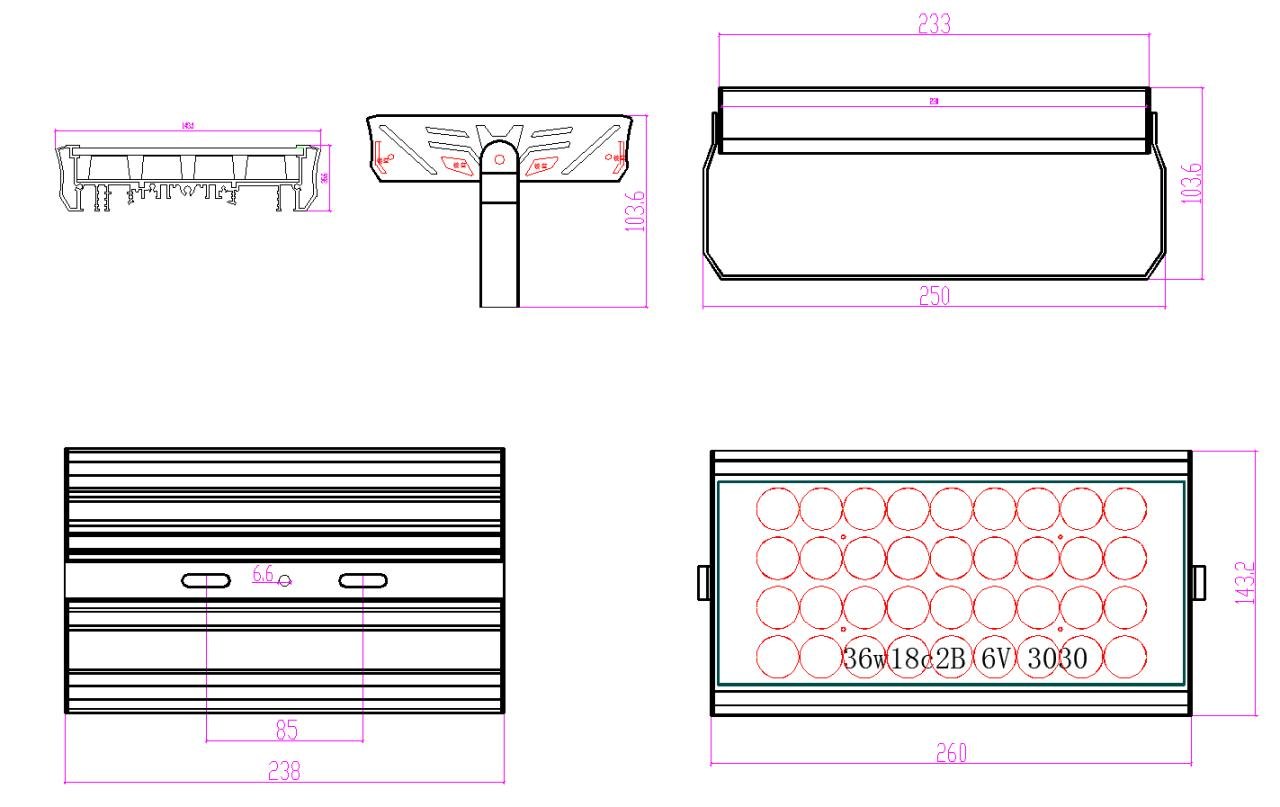
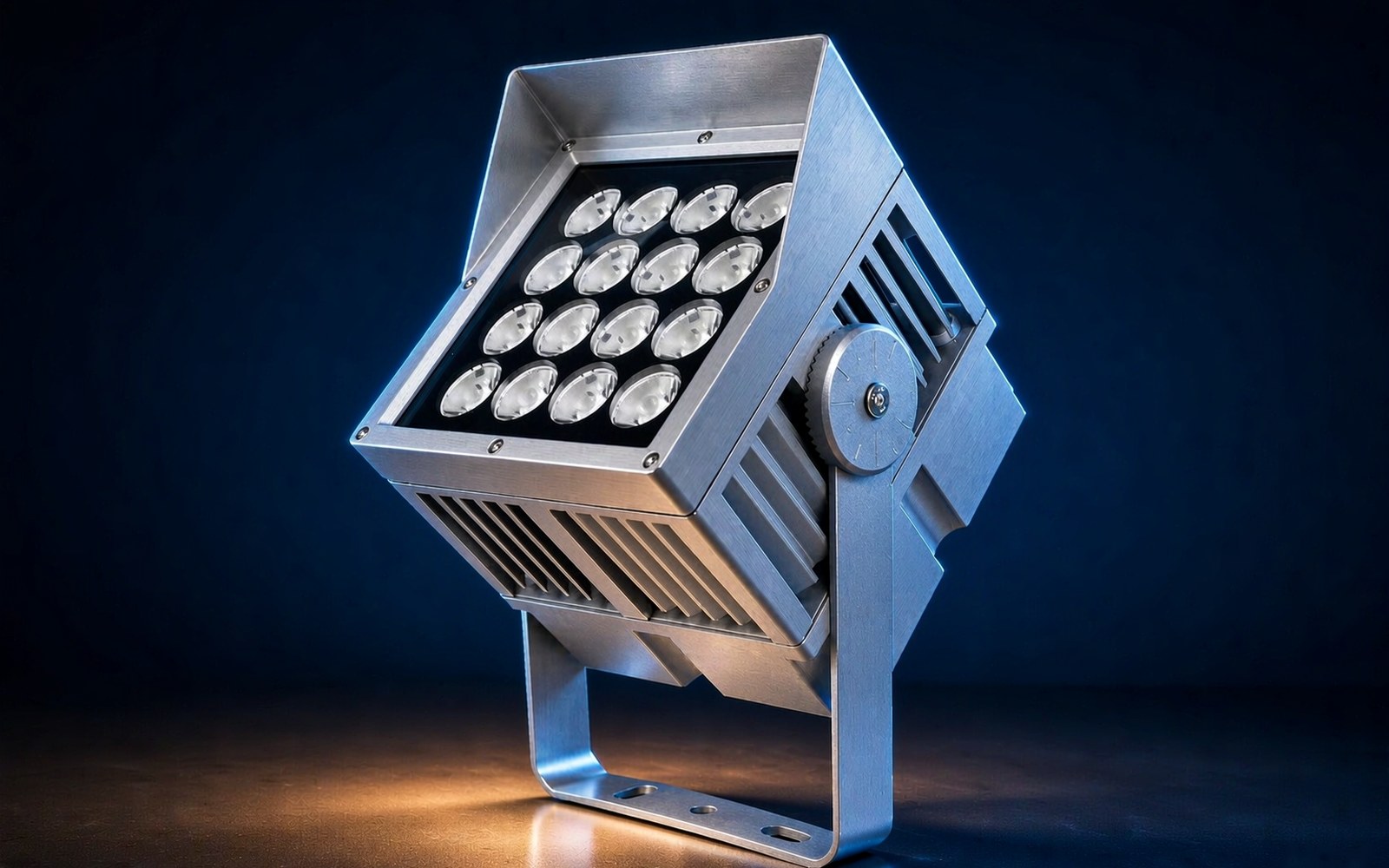
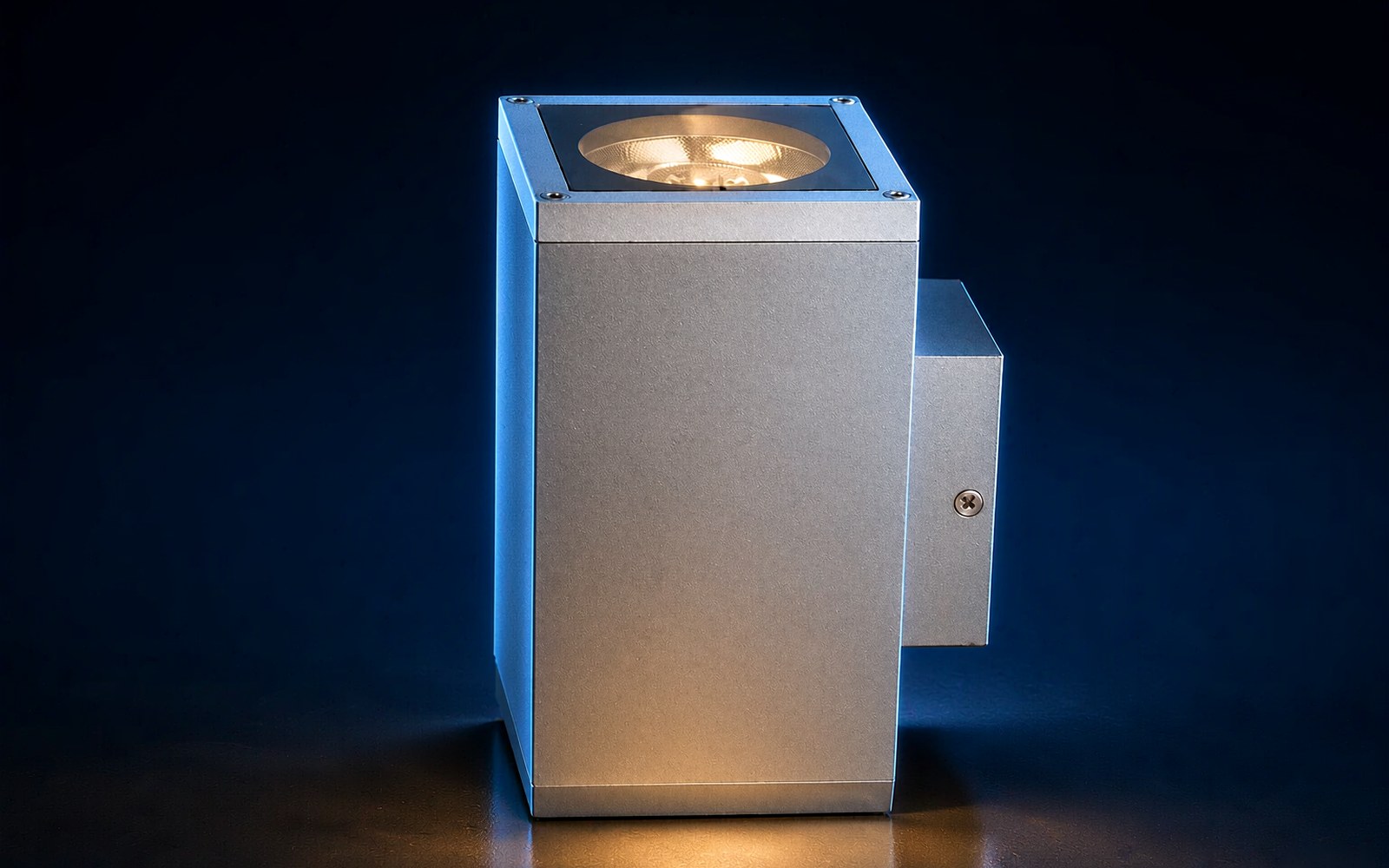
Catalogue detail views for this family — 6063 aluminium housings, IP65 / IP68 sealing and the beam options from 10° to 60°. Alt text and captions describe the actual component shown, not a generic fixture photograph.
Typical applications
- Curved building outlines and architectural contours
- Commercial space and cove linear lighting
- Cabinet, ceiling and wall hidden linear runs
- Signage letters and artistic shapes
- Media facade and cultural tourism installations
- Continuous lines requiring top or side emission
Quality and documentation
- Section size, emitting direction and PCB width recorded per BOM line
- Representative values flagged as catalogue page data, not family-wide guarantees
- Batch grouping for colour consistency on one visible line
- Pre-shipment power-on and uniformity check
- CE documentation available per model; scope confirmed per project
What we do not do
We do not supply bare LED strip, LED chips, interior residential strip kits or addressable video products. We do not publish customer drawings, and we do not claim UL, ETL, SAA, RCM, EAC or ISO certification, fixed MOQ, fixed lead times or a blanket warranty. The 20 M continuous run, dot-free and angle claims in the source material are catalogue descriptions and are not treated as tested whole-fixture performance without model-specific confirmation.
Technical questions
What is the difference between top view and side view neon flex?
Top view emits perpendicular to the mounting surface; side view emits along the profile edge, which suits recessed reveals and curved outlines where the profile is seen from the side. Both appear in the catalogue across sections from 6x6 mm to 20x20 mm.
Can co-extruded neon flex be cut and re-terminated on site?
It can be cut only at designated points and the end must be resealed with the correct cap and potting to retain its rating. A field-cut end without proper sealing is no longer IP-rated. We list end caps and tail plugs per run in the BOM.
What is the minimum bending radius?
It depends on the section and the bending direction. The catalogue documents representative sections such as 6x6 mm top view and 6x16 mm side view anti-break, but the minimum radius must be confirmed against the original specification for the exact model before fabrication.
Do the 43.5 g/m and 109 g/m weights apply to all profiles?
No. Those are representative page values for the 6x6 mm top-view and 6x16 mm side-view anti-break sections respectively. We do not extrapolate a representative value to all 53 entries.
Adjacent products and capabilities
LED Wall Washers
An LED wall washer is a linear outdoor luminaire that grazes or washes a vertical surface from a short setback, using a controlled beam rather than a general flood. Guangdi Xingcan lists 20 wall washer models in its 2026 catalogue, with DC24V input, IP65 construction, 18-72 W power options, 30 degree, 60 degree, 10x30 degree and 10x60 degree beams, and DMX512 control on RGB and RGBW versions..
View productArchitectural Linear Lights
An architectural linear light is a continuous extruded luminaire used to trace building outlines, curtain wall mullions, bridge edges and cornices rather than to wash a surface. Guangdi Xingcan catalogues 10 GD-L linear models plus the GD-U contour families, typically in 1000, 500 and 260 mm lengths at DC24V, with IP65 construction, single colour / RGB / RGBW output and ON/OFF, TTL or DMX512 control..
View productPixel & Point Lights
A pixel point light is an individually addressable LED node used to build low-resolution video, animation and chasing effects across a building skin or bridge cable. Guangdi Xingcan catalogues 27 pixel and point light models (GD-P and GD-PM families), with DC12V/DC24V supply, single colour / RGB / RGBW output, DMX512 control and node densities from 36 to 400 points per square metre..
View productProject BOM & QA
Fixture schedules across 98 catalogued models, batch consistency grouping and power-on checks before packing.
View capabilityScope boundary — GDXC supplies outdoor architectural and landscape LED lighting and DMX512 control systems only. We do not supply indoor residential lighting, road or tunnel main lighting, or bare LED chips and emitters, and we do not publish client drawings, unverified certifications, fixed lead times or fixed prices. CE documentation available per model; scope confirmed per project. RoHS and IP test reports can be requested per model. Established 2014 in Shenzhen; final fixture selection, quotation and installation are confirmed between the client and our technical team.
Send your facade drawings or lighting effect renders
Share an elevation drawing, an effect render or a draft fixture list. Our project engineers return a fixture BOM, beam-angle and optical distribution suggestions, and DMX512 addressing coordination. Final selection, quotation and installation are confirmed with your technical team.